AI Receptionist for HVAC Companies: Never Miss Another 2 AM Call
When the heat dies at 2 AM, your customer calls the first company that answers. An AI receptionist makes sure it is you.
It is 2 AM in January. A furnace stops, the house is getting cold, and a homeowner does what every homeowner does: they Google an HVAC company and start calling. The first company's phone rings out to voicemail. So does the second. The third one answers — and gets the job.
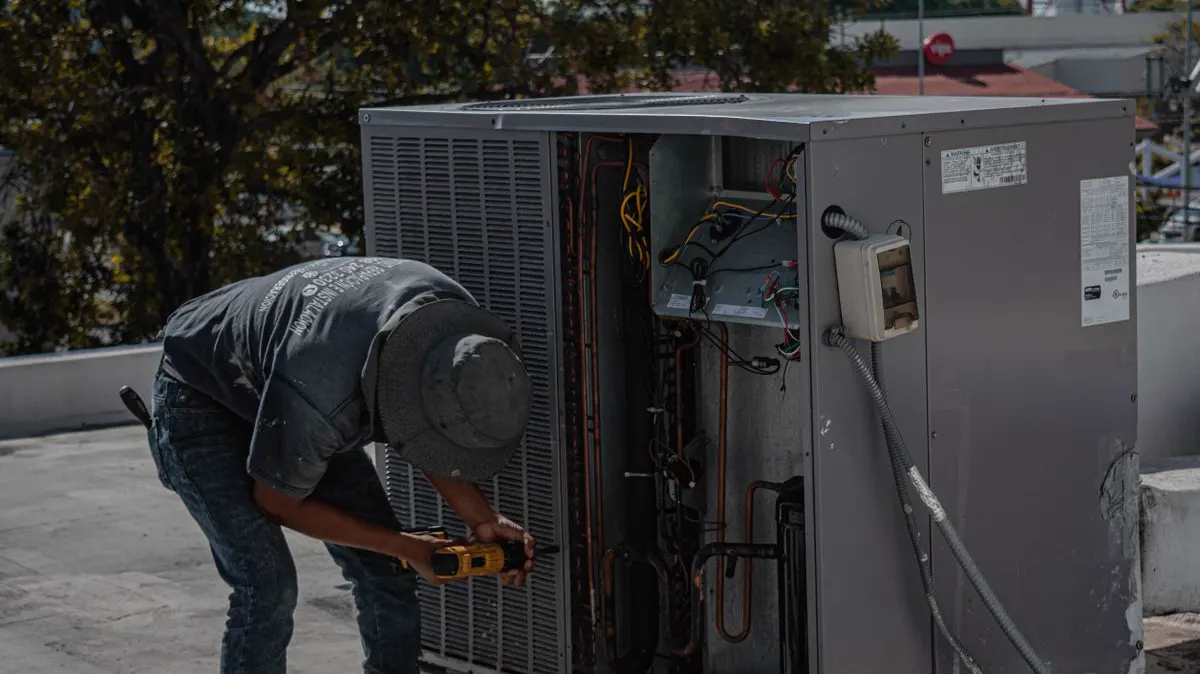
Nothing about that story is unusual. Your techs are on roofs, in crawl spaces, and under houses all day. Your office, if you have one, closes at five. Nights, weekends, and the first hot week of June — exactly when call volume explodes — are exactly when an HVAC company is hardest to reach. An AI receptionist for HVAC companies exists to close that gap: it answers every call, in your company's name, in seconds, around the clock.
This guide covers what an HVAC AI receptionist actually does, how it works step by step, what missed calls really cost a shop your size, how it compares with an answering service or hiring, and the checks to run before you buy one.
What is an AI receptionist for HVAC companies?
An AI receptionist is a voice agent that answers your business phone with a natural-sounding voice and handles the call the way a good front-desk hire would. It greets the caller with your company name, finds out what they need, asks your qualifying questions, and then does one of three things: books the job into your calendar, flags a true emergency to your on-call technician, or answers routine questions about your services, hours, and service area.
It is not voicemail, and it is not a phone tree. The caller talks, it listens and responds, and the job gets booked in the same conversation. After the call, you get a summary — who called, what they need, what was booked — so you start the morning knowing exactly what is on the board.

How it works, step by step
- You keep your number. Your existing business line forwards to the AI receptionist — always, or only when nobody picks up: after hours, on jobs, or when the office is busy.
- It answers in seconds, in your name. No ringing out, no voicemail greeting. The caller hears your company name and a calm, natural voice.
- It qualifies the call. No heat or no cool? Strange noise or a maintenance visit? It asks the questions you would ask — problem, urgency, service address, best callback number.
- It books or dispatches. Routine work goes straight into your calendar. A true emergency — no heat with an elderly parent in the house, a burst pipe from a frozen line — is flagged to the on-call tech immediately, with the details.
- You get the summary. Every call lands in your inbox or phone with the caller's details and the outcome, plus a recording if you want it. Nothing depends on someone remembering to pass along a message.
The calls it handles best
Not every call is equal. These are the ones where an AI receptionist earns its keep for an HVAC shop:
- After-hours emergencies. No-heat and no-cool calls at night are the highest-intent calls in the industry — and the ones most likely to hit voicemail today.
- Peak-season overflow. The first heatwave of summer can triple call volume in a day. The AI answers the tenth simultaneous call as fast as the first.
- Maintenance and tune-up bookings. High-volume, low-complexity calls that eat office time — perfect to automate.
- Replacement and install estimates. A system replacement can be worth $8,000–$15,000. Losing that inquiry to a competitor's faster answer is the most expensive missed call of all.
- Routine questions. Service area, hours, whether you offer a maintenance plan — answered instantly, without pulling a tech off a job.

What missed calls actually cost an HVAC shop
Let's do honest math. This is an illustrative example — plug in your own numbers — but it uses deliberately modest assumptions.
Say your shop misses 10 calls a month — after hours, on jobs, during the lunch-hour rush. Suppose only 1 in 3 would have booked, at a conservative average ticket of $450 for emergency and repair work.
10 × 33% × $450 ≈ $1,500/month in lost jobs
That is roughly $18,000 a year — before counting the two losses that hurt most: the replacement install that went to the competitor who answered ($8,000–$15,000 in a single job), and the maintenance-plan customer who would have stayed with you for a decade. Callers rarely leave voicemails; industry research cited by call-tracking firms consistently shows most hang up and call the next company on the list. If you want the full formula for any trade, see our guide to the real cost of missed calls.

AI receptionist vs. answering service vs. hiring
There are three established ways to cover your phones. Here is the honest comparison:
Hire a receptionist / CSR. A real person who knows your customers is wonderful — for roughly $35,000–$50,000 a year in salary alone, plus payroll taxes, training, sick days, and turnover. And they still only cover business hours: the 2 AM call still rings out.
Traditional answering service. Typically $200–$500/month plus per-minute charges. A human answers, takes a name and number, and you call back in the morning to qualify and book — if the caller has not already booked with someone else. It takes messages; it does not book jobs.
AI receptionist (AI Plexis). $1,000 one-time setup + $500/month flat, no per-minute charges. Answers every call in seconds, 24/7/365 — nights, holidays, and the hottest week of the year. Asks your questions, books routine jobs into your calendar, flags emergencies to your on-call tech, and sends you the summary.
One saved install job can pay for more than a year of the service.
The trade-off to know: an AI receptionist is brilliant at the calls that follow your rules — booking, qualifying, routing, answering standard questions. Unusual or sensitive situations get captured and flagged for you rather than improvised. For most shops, that is exactly the right division of labor. For a deeper pricing breakdown across providers, see how much an AI receptionist costs.

What to check before you buy
- Does it book, or just take messages? Message-taking is voicemail with better manners. Insist on seeing a job actually booked in a demo.
- Who sets the emergency rules? You should decide what counts as urgent — no heat below freezing, gas smell, water damage — and what happens next for each type.
- Is it trained on YOUR business? Your services, your service area, your prices for standard calls, your booking questions. A generic script will embarrass you; a trained agent sounds like your shop.
- Do you keep your number and your calendar? The answer should be yes to both — forwarding in, bookings into the calendar you already use.
- Can you hear it before you pay? Any serious provider will demo the agent live, ideally on a call that sounds like your customers. Book a free demo and throw your hardest after-hours scenario at it.
How setup works
With AI Plexis, setup is measured in days, not months:
- A short setup call. We map your services, service area, hours, emergency rules, and the questions you want asked on every call.
- We build and train your agent. It learns your business and speaks in your company's name, with your booking flow.
- You review test calls. Hear it handle a no-heat emergency and a maintenance booking. Adjust anything — then go live.
And the safety net: every plan includes a basic website chatbot free with the voice agent, so the customers who message instead of calling get answered too.
Frequently asked questions
How much does an AI receptionist for an HVAC company cost?
Pricing varies — per-minute, per-call, or flat monthly. At AI Plexis it is $1,000 one-time setup + $500/month flat with no per-minute charges, answering unlimited calls 24/7. A full-time receptionist runs roughly $35,000–$50,000 a year in salary alone and still only covers business hours.
Can it really book jobs, or does it just take messages?
It books in the same call: it asks your qualifying questions, books routine work into your calendar, and flags emergencies to your on-call technician. Message-only systems are the ones to avoid.
Do I have to change my business phone number?
No. Your number stays the same; calls forward to the AI receptionist always, or only when you cannot answer.
Will my customers know they are talking to an AI?
It converses naturally, and you choose how it introduces itself. What customers remember is that somebody answered immediately — at 2 AM, on a Sunday, in a heatwave.
How long does setup take?
Most HVAC companies go live within a few days: a setup call, agent training on your business, and your review of a few test calls.
Hear it answer an HVAC call
Book a free 15-minute demo and hear an AI receptionist handle a 2 AM no-heat call — trained on your business, in your company's name.
Book a Free Demo →