AI Receptionist for Pest Control: Every Panicked Call Answered, 24/7
A wasp nest under the eaves on a Sunday evening. The homeowner is already scared — and calling down a list. An AI receptionist makes sure your pest control company is the one that answers.

It is 7 PM on a Sunday. A homeowner finds a wasp nest the size of a football under the eaves, right above the back door the kids use. Nobody is getting stung yet — but everybody is scared, and nobody is waiting until Monday. They Google "wasp nest removal near me" and start calling down the list. The first company's phone rings out to voicemail. The second one too. The third one answers — and gets the job, plus the quarterly treatment plan that follows it.
That is the entire business case for an AI receptionist for pest control in one paragraph. Pests trigger something primal — fear, disgust, urgency — and a panicked caller does not comparison-shop. They hire whoever picks up first. If your phones go to voicemail after 5 PM, on weekends, or while your techs are sealed inside protective suits mid-treatment, you are not losing "calls." You are losing jobs — and the recurring treatment plans attached to them.
This guide explains what an AI receptionist for pest control actually does, what it costs compared to a human receptionist, how to choose the right one, and — honestly — what it cannot do. No hype, no invented case studies. Just the mechanics, the math, and the questions to ask before you buy.
1. Why pest control companies lose more to missed calls than they think
Every service business loses money on missed calls. But pest control sits in a uniquely painful spot, for three reasons.
First, pest calls are emotional. Wasps near the kids' play area, bed bugs found the night before a trip, scratching in the attic at 2 AM — these callers are not calmly requesting quotes. They are frightened or disgusted, and emotion compresses the buying decision into a single question: who answered? A homeowner who finds bed bugs does not call three companies and wait for callbacks. They call until a human-sounding voice says "we can help," and the search stops there.
Second, the phones explode exactly when your crew is maxed out. Pest control is brutally seasonal. Summer brings the wasp, ant, and mosquito surge — the same weeks your techs are booked solid, sealed in protective gear, on ladders, and physically unable to touch a phone. The busiest revenue weeks of your year are the weeks your phones are least answered. An answering service takes a message; by the time you call back, the nest has been handled by whoever answered live.
Third, you lose the recurring revenue, not just the one job. Here is the part that stings most: a wasp-nest removal is a one-time job, but the homeowner who trusts you in a panic becomes a quarterly treatment customer — four visits a year, every year, plus referrals to neighbors with the same problem. Lose the emergency call and you do not lose one job. You lose years of recurring revenue from that household.
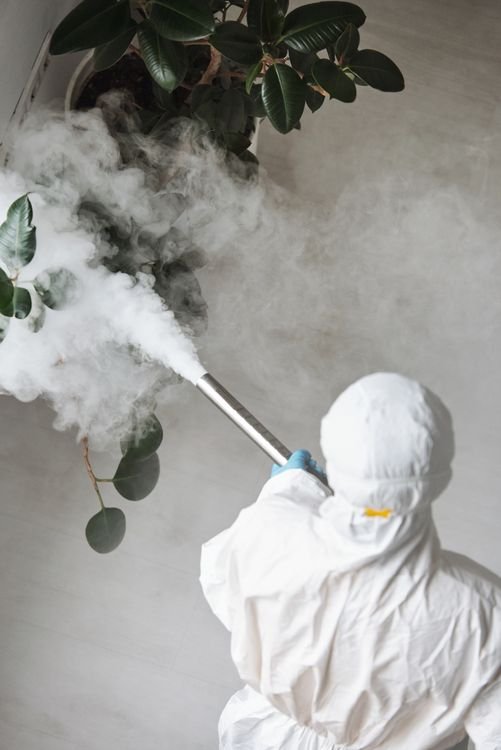
2. What an AI receptionist for pest control actually does on a call
Forget the robocall image. A modern AI receptionist is a voice agent — it picks up in about a second, holds a natural conversation, and follows a call flow trained on your business: your services, your service area, your hours, your prices, and your emergency rules. Here is what a typical pest control call looks like:
- It answers immediately, 24/7. Evenings, weekends, holidays, the middle of the summer surge — every call gets a live-sounding answer on the first ring. No voicemail, no "press 1."
- It triages: emergency or routine? This is the part that matters most for pest control. It asks the right questions in plain language: Is anyone allergic to stings? Are the wasps inside the house or outside? Did you find bed bugs before traveling? Are rodents near food areas? Based on the answers — and the emergency rules you defined — it routes the call down the right path.
- Emergencies get the emergency protocol. The caller hears a calm, competent response: help is being dispatched. Behind the scenes, your on-call tech gets an immediate text or call with the customer's name, address, phone number, allergy information, and what is happening. For stinging insects, it can also give the single most valuable safety guidance — keep people and pets away from the nest — while help is on the way.
- Routine calls get booked. Quarterly treatment reschedule, termite inspection, a quote for mosquito control — the agent collects the details and books the visit straight into your calendar, confirming the address and the best callback number. No phone tag.
- Everything is logged. Every call produces a record: who called, what they needed, what was booked, what was escalated. You wake up to a summary instead of a voicemail graveyard.
The key difference from a cheap answering service: an answering service takes a message and hopes someone calls back. An AI receptionist resolves the call — it books the inspection or dispatches the emergency in the same conversation. That is what turns a ringing phone into revenue instead of paperwork.
3. What it costs vs. a human receptionist
Let us do the math honestly, because this is where most pest control owners make the decision.
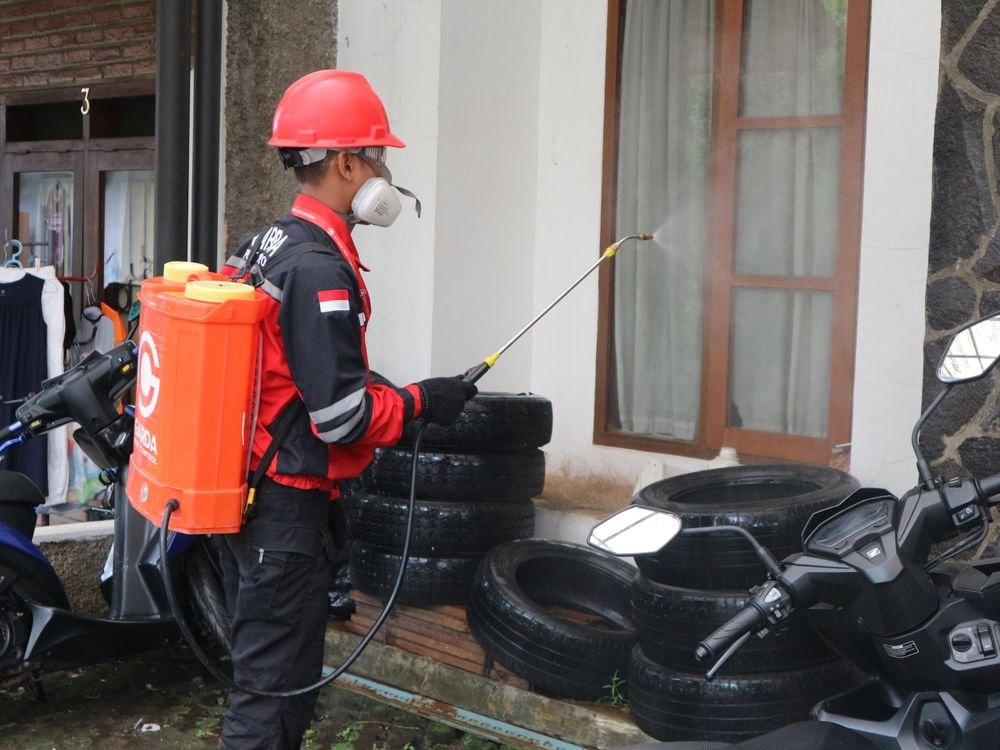
A full-time in-house receptionist in the US costs roughly $35,000–$50,000 a year in wages alone — before payroll taxes, benefits, training, sick days, and turnover. And that person answers the phone about 40 hours a week. Evenings, weekends, and the summer surge still go to voicemail, which is precisely when your most valuable calls arrive.
An AI receptionist from AI Plexis costs $1,000 one-time setup plus $500/month flat — unlimited calls, 24 hours a day, 7 days a week. A basic website chatbot comes free with any service, so after-hours website visitors get answered too.
The first-year math:
AI receptionist: $1,000 + ($500 × 12) = $7,000, covering every hour of the year.
Human receptionist: $35,000–$50,000+ in wages alone, covering ~40 hours a week.
The AI pays for itself if it saves roughly one job a month.
And remember what a "saved job" means in pest control: not just the one-time removal, but the quarterly treatment plan that follows it. One converted panicked caller can be worth years of recurring visits. Everything beyond that is margin.
Watch out for per-minute pricing from other providers: it sounds cheap until the summer surge arrives with a flood of long, emotional calls and the bill follows your call volume upward. Flat monthly pricing means the system gets cheaper per call the busier you are — which is exactly the direction you want the incentive to point.
4. How to choose the right AI receptionist for your pest control business
Not all AI receptionists are built for the trades. A generic virtual receptionist trained on appointment reminders will fumble a wasp-emergency call. When you evaluate providers, ask these six questions:
- Can I define my own emergency rules? Your shop's definition of an emergency — active wasp nest, sting allergy, bed bugs before travel, rodents in food-prep areas — should drive the call flow, not a vendor's generic template. If the provider cannot show you how emergency triage works, walk away.
- Does it book into my existing calendar or scheduling software? A receptionist that "takes a message about booking" is a voicemail with extra steps. It should place real bookings — inspections, one-time treatments, recurring quarterly visits — with address, contact details, and job notes attached.
- How does emergency escalation work? You want an immediate alert to your on-call tech — text, call, or both — with the full context, not an email you read in the morning.
- Do I keep my business number? The answer should be yes. Calls forward to the AI only when you want — after hours, on overflow, or always. Customers should never notice a change.
- Can I hear test calls before it goes live? Any serious provider will let you review and approve real test calls — including a simulated Sunday-evening wasp emergency — before a single real customer hears it.
- Who trains it on my business? The setup should cover your services, service area, hours, pricing guidance, treatment types, and dispatch rules. A system reading from a generic script will sound like one.

And one question to ask yourself: what does a missed panicked call cost me? If the answer is "a lot," the bar for trying this is low — the downside of a one-month trial is a few hundred dollars; the downside of another summer of missed Sunday calls is the recurring revenue you will never know about.
5. Honest limits: what an AI receptionist can't do
No honest guide skips this part. An AI receptionist is a front desk, not an entomologist. Here is what it cannot do:
- It cannot identify pests or recommend treatments. A caller describing "tiny black bugs" could mean five different things, and getting the treatment wrong is worse than saying nothing. The AI writes down what the caller describes, in their words — identification and treatment decisions stay with your trained techs. Set that rule explicitly: when in doubt, escalate.
- It cannot do the physical work. Obvious, but worth saying: the value is entirely in capturing the job. Your techs still do the heroic part.
- It is only as good as its training. A rushed setup with vague emergency rules produces a vague receptionist. The providers worth paying are the ones who spend real time learning your business before go-live — and let you correct test calls.
- Some callers will always want a human. A small fraction of people hang up on anything that is not clearly human. The right setup minimizes this with a natural voice and your chosen introduction — and the math still works, because you are comparing against voicemail, not against a perfect human.

The honest framing: an AI receptionist does not replace judgment. It replaces the absence of an answer — the ringing phone on a Sunday evening that currently resolves to nothing. Everything it is unsure about should land in front of a human within minutes, with full context attached. That is the standard to hold any provider to, including us.
Frequently asked questions
How much does an AI receptionist for pest control cost?
Pricing varies by provider — some charge per minute or per call, others a flat monthly fee. At AI Plexis, an AI voice agent is $1,000 one-time setup plus $500/month flat, with unlimited calls answered 24/7. A basic website chatbot is free with any service. Compare that with a full-time receptionist at roughly $35,000–$50,000 a year in wages alone, who still only covers business hours.
Can an AI receptionist tell a real pest emergency from a routine call?
It is trained on your emergency rules. An active wasp nest, a caller with a sting allergy, bed bugs discovered before travel, or rodents in a food-prep area follows your emergency path — the caller is reassured and your on-call tech is alerted immediately with the details. A quarterly treatment reschedule or a general quote goes to normal booking. You define what counts as an emergency during setup.
Do I have to change my pest control business phone number?
No. You keep your existing number. Calls are forwarded to the AI receptionist all the time, or only when you cannot answer — after hours, when your techs are mid-treatment, or when the line is busy. Customers dial the same number they always have.
Will my customers know they are talking to an AI?
The voice is natural and conversational, and you choose how it introduces itself during setup. In practice, what a panicked caller remembers is not who answered — it is that somebody answered immediately, stayed calm, and got help moving.
How long does setup take for a pest control company?
Most setups go live within a few days. The work is training the agent on your business: your services, service area, hours, pricing guidance, treatment types, and emergency rules. Because it is built per business rather than from a generic script, a short setup call and a review of a few test calls are usually all it takes.
Stop losing Sunday-evening jobs to voicemail
See exactly how an AI receptionist would handle your pest control company's calls — including a live test of a wasp-nest emergency call.