AI Receptionist for Roofing Companies: Stop Losing $5,000 Jobs to Voicemail
The phone rings loudest exactly when you are least able to answer — on a roof, on a ladder, in a storm
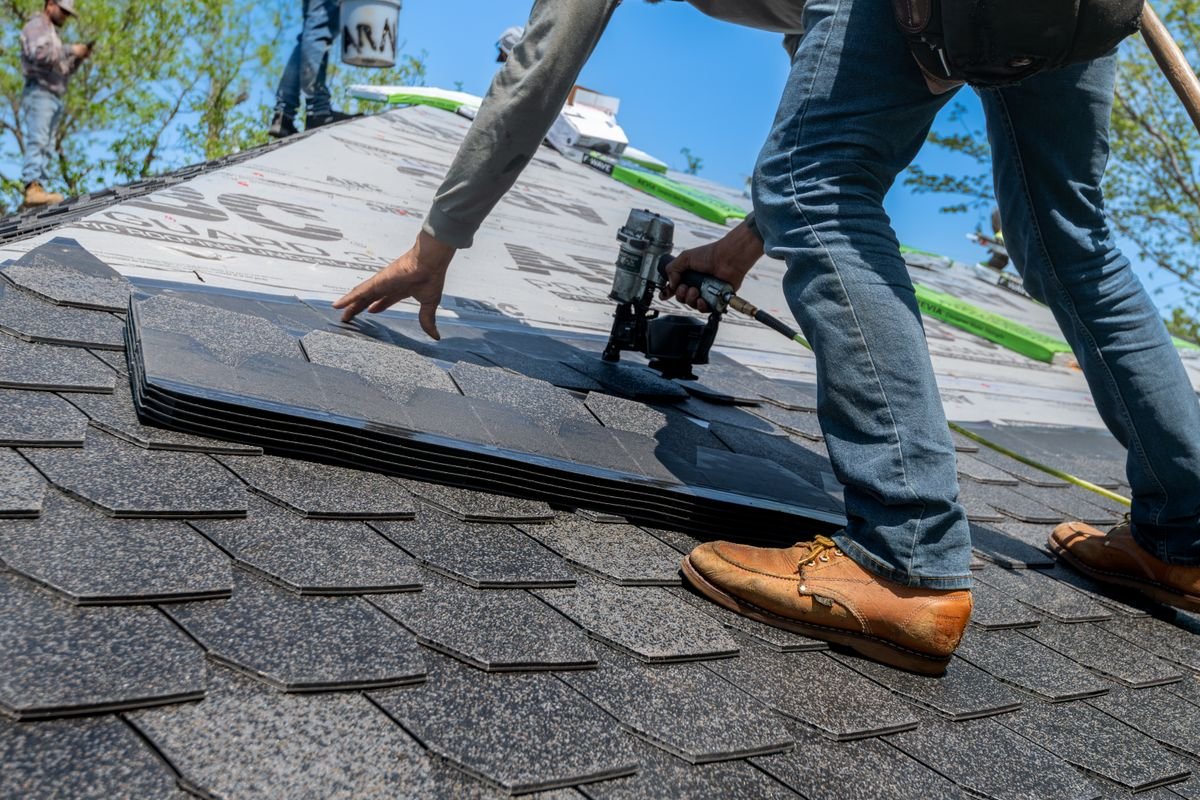
You are forty feet up, nailing shingles, when your phone rings in your pocket. You can't answer — and by the time you climb down, the caller has already dialed the next roofer on Google. That is the daily reality of roofing: the work that pays you is the exact work that stops you from answering the phone.
And then there is storm season. One hailstorm rolls through your county and every homeowner with a dented roof starts calling every roofer they can find — at the same time. Industry data puts it bluntly: roofing companies miss 50–70% of incoming calls during post-storm surges, and roughly 78% of callers who reach voicemail won't leave a message — they call the next contractor on the list (DigitalPhone.ai). Every one of those missed calls is a lost inspection, a lost roof replacement, and $5,000 to $25,000 handed directly to your competitor.
An AI receptionist for roofing companies fixes this at the root: it answers every call in seconds, 24/7 — captures the storm-damage details, books the inspection into your calendar, and sends you a summary — so your crew keeps working while every lead gets caught.
Storm season: when the phone explodes
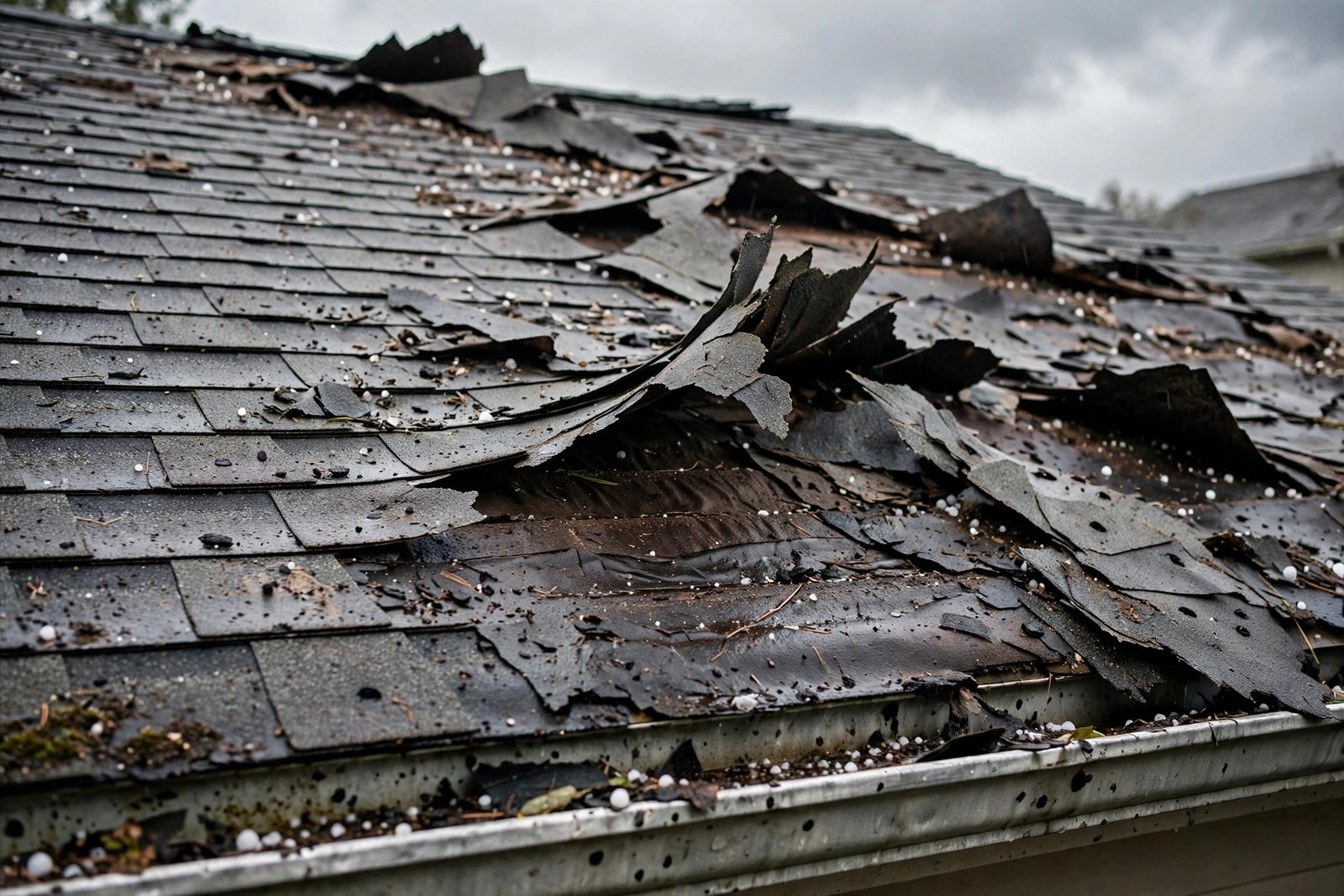
Roofing is one of the most time-sensitive trades in construction. Your crews are on ladders, your estimators are driving between inspections, and your office staff — if you even have one — is buried in insurance paperwork. Then a hailstorm or hurricane hits and call volume can surge 300–400% overnight.
You can't hire a temporary receptionist at 10 PM on a Saturday. But a homeowner with water coming through the ceiling doesn't care about your staffing problem — they hire whoever picks up first. Do the math on a single lost storm-season weekend:
An illustrative example — plug in your own numbers:
15 missed storm calls × 30% that would have become jobs × $8,000 average roof job
= $36,000 in one weekend. Gone to whoever answered.
This is not a "someday" problem. Every storm season, the same pattern repeats: the roofers who answer win the season; the ones on voicemail get the leftovers.
What an AI receptionist actually does for a roofing company

Forget the generic phone bot. A receptionist built for roofers is trained on your business — your services, your prices, your hours, your booking rules — and handles the calls the way your best office hire would:
- Answers every call 24/7 — including multiple callers at once during a storm surge. No busy signal, no voicemail.
- Storm-damage intake — captures the address, where the leak is visible, roof type, when it started, and how urgent it is.
- Books inspections into your calendar — offers real open slots during the call and confirms the appointment on the spot.
- Routes true emergencies — an active leak gets flagged and escalated to you immediately, not buried in a message list.
- Handles insurance questions honestly — takes the caller's claim context and routes it to you; never interprets coverage or promises an outcome.
- Sends you a clean summary — caller name, number, address, problem, urgency — so you can quote and book while the customer is still deciding.
- Filters the junk — spam and sales calls never reach you.
The result: your crew stays on the roof, your estimator stays on the road, and no lead ever hears a beep.
A sample call — what your customers hear
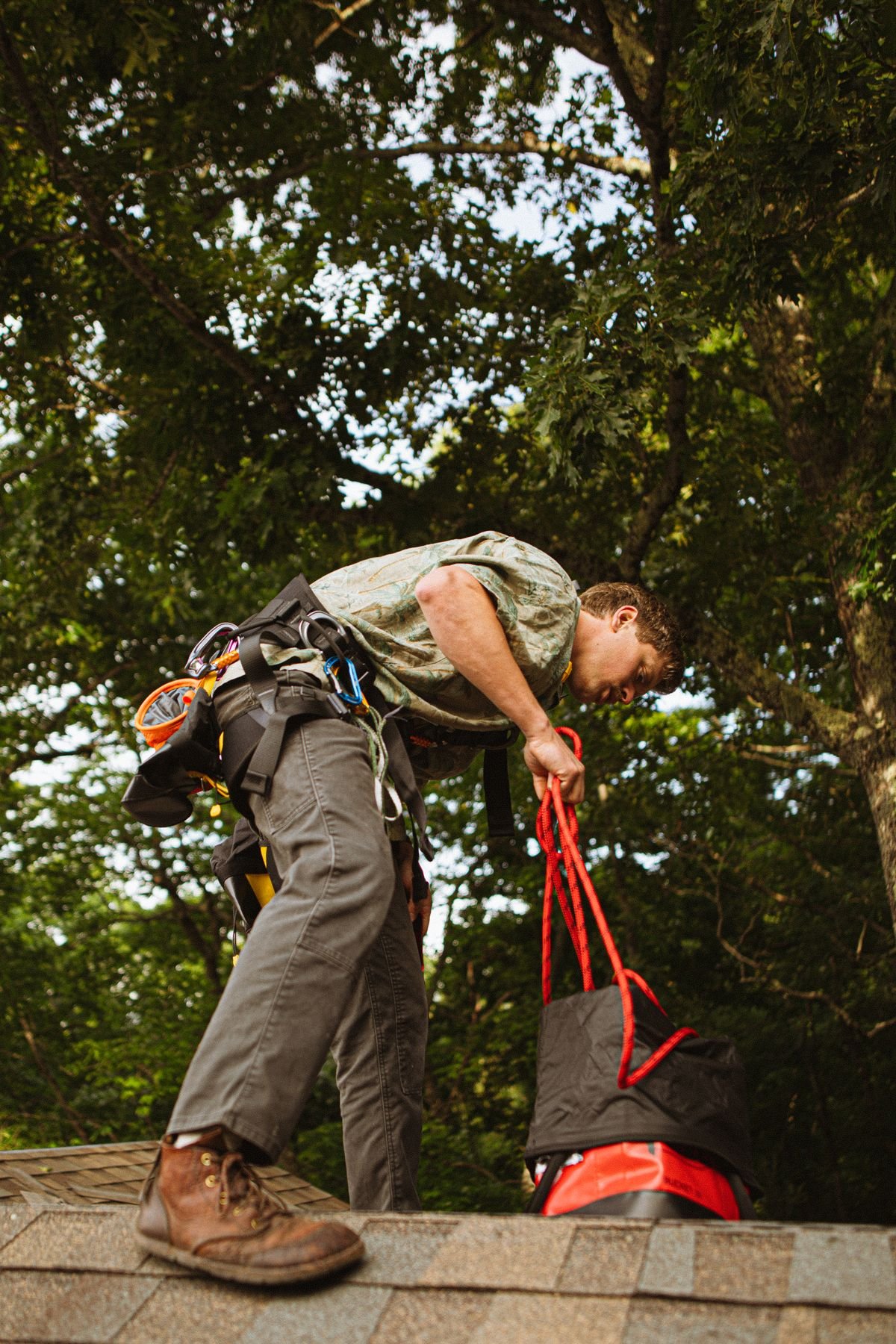
Here is an illustrative example of a Tuesday-evening storm call. The owner is at dinner; the AI picks up on the second ring:
AI: "Thanks for calling Apex Roofing — this is Maya. How can I help?"
Caller: "Hi — we had hail last night and there's water coming through our ceiling in the guest bedroom. Can someone come look?"
AI: "I'm sorry — a leak is urgent, let's get you sorted. What's the address?"
Caller: "88 Birch Lane."
AI: "Got it. Do you know what type of roof you have — shingle, tile, metal?"
Caller: "Shingle, I think."
AI: "Thank you. I have an inspection slot tomorrow at 10:00 AM or Thursday at 2:00 PM — which works better?"
Caller: "Tomorrow at 10."
AI: "Done — inspection booked for tomorrow at 10:00 AM at 88 Birch Lane. I'll text you a confirmation, and our team will call you 30 minutes before. Is there a good callback number?"
Thirty seconds later the owner gets a text summary: name, number, address, active leak, shingle roof, inspection booked tomorrow 10 AM. The job is won before the owner finishes dinner.
The math: what it costs vs. what it saves

A part-time in-house receptionist in the US typically costs a roofing company $2,000+ a month — for business hours only, five days a week, with sick days and turnover. An after-hours answering service charges per call and hands you a list of names to call back tomorrow, when half of them have already hired someone.
One recovered roof replacement at a $8,000–$12,000 average job value pays for months of 24/7 coverage — not weeks, months.
AI Plexis's AI voice agent is $1,000 setup plus $500 per month — answers 24/7, books inspections, captures every lead, filters spam. And a basic website chatbot is free with any AI Plexis service, so the same coverage works on your website at 2 AM too. No invented ROI promises — just count how many storm calls you missed last season and multiply.
What to look for before you buy
Not every AI receptionist is built for roofing. Before you sign anything, check these five things:
- Roofing-specific intake — it should ask about leak location, roof type, address and urgency, not generic "how can I help" scripts.
- Storm-surge capacity — it must handle several callers at once. If it puts caller two on hold, you have just bought a fancier voicemail.
- Real calendar booking — not "we'll have someone call you back." The inspection slot should be booked during the call.
- Honest insurance handling — it captures the claim context and routes to you; it never interprets coverage or promises outcomes.
- A free demo on your own calls — hear it handle a storm call for your business before you pay anything. (AI Plexis offers a free 15-minute demo.)
Storm-season playbook: live before the next hailstorm
You don't need a six-week IT project. The roofers who win storm season set this up in days, not months. Here is the practical order of operations:
- Map your five most common calls — active leak, storm inspection, repair estimate, full replacement quote, insurance question. These become the AI's call flows.
- Write your booking rules — which days and hours you take inspections, how much buffer between jobs, who gets the urgent-leak alerts and how (call, text, or both).
- Set up call forwarding — missed and after-hours calls route to the AI; your existing number stays exactly the same.
- Test it with a real storm call — place a test call pretending to be a homeowner with a leak. If it books the inspection and texts you the summary, you're live.
- Brief your crew — everyone should know the AI now catches overflow calls, so nobody panics when the phone doesn't ring and quotes still come in.
Do this before the next storm warning, not during it. The roofers who set up mid-storm are already losing the weekend.
Frequently asked questions
How much does an AI receptionist for roofing companies cost?
AI Plexis's AI voice agent costs $1,000 setup plus $500 per month — it answers calls 24/7, books inspections, and captures every lead. A basic website chatbot is free with any AI Plexis service.
Can an AI receptionist handle storm-surge call volume?
Yes — that is exactly where it shines. It picks up every call even when several come in at once, so nobody gets a busy signal or voicemail while you are on a roof. Storm-damage intake (leak location, roof type, address) is captured for every caller.
Does it book roof inspections into my calendar?
Yes. It is trained on your services, hours and booking rules, and books inspection slots directly into your calendar during the call — then sends you a summary with the caller's details.
What happens when a caller asks about insurance claims?
It captures the caller's question and claim context and routes it to you — it never interprets coverage or promises a claim outcome. You review the facts and decide the next step.
Will callers know it is AI? Will it sound robotic?
It is trained on your business — your greeting, services, prices and rules — and speaks in a natural voice. The free demo lets you hear exactly how it handles your calls before you decide anything.
Do I need to change my business phone number?
No. It works with your existing number through call forwarding, so customers keep calling the number they already know.
Stop losing $5,000 jobs to voicemail
Hear an AI receptionist handle a storm call for your roofing company — free 15-minute demo, no commitment.
AI voice agent: $1,000 setup + $500/month · Basic website chatbot free with any service